)
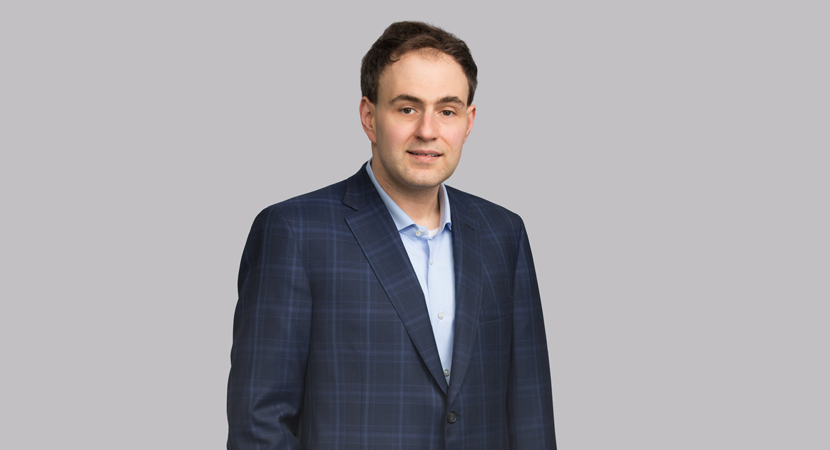
Loeb & Loeb Patent Litigation & Counseling partner Ryan Hagglund is featured in a Law360 article discussing the Federal Circuit’s recent decision to reinstate the University of Pennsylvania’s gene therapy patent, an opinion that helps clarify the boundary between patent‑eligible inventions and naturally occurring biological materials.
On Feb. 20, 2026, the Federal Circuit held that the university’s patent on a human-made cell—licensed by Regenxbio Inc.—does not extend to naturally occurring phenomena that fail to meet established standards for patent eligibility.
In the article, Ryan notes that the ruling aligns with existing precedent and helps avoid significant disruption across the industry. “That would have certainly disrupted the way a lot of companies engage in their patenting strategy regarding gene therapy, especially in terms of the methods of producing viral vector and recombinant viruses," he said, referring to the way modified genes are delivered to treat a condition.
Ryan also said that the evolving relationship between the Alice/Mayo framework and the Chakrabarty/Myriad line of cases bears watching, noting that the former typically governs method claims, while the latter more often addresses composition-of-matter claims.
"Are there circumstances where you should be looking to both? And then what would happen if the Alice analysis and the 'markedly different' analysis would lead to different results?" Ryan said. "There isn't any case law addressing that."
To read the full article, please visit Law360’s website (subscription may be required).
On Feb. 20, 2026, the Federal Circuit held that the university’s patent on a human-made cell—licensed by Regenxbio Inc.—does not extend to naturally occurring phenomena that fail to meet established standards for patent eligibility.
In the article, Ryan notes that the ruling aligns with existing precedent and helps avoid significant disruption across the industry. “That would have certainly disrupted the way a lot of companies engage in their patenting strategy regarding gene therapy, especially in terms of the methods of producing viral vector and recombinant viruses," he said, referring to the way modified genes are delivered to treat a condition.
Ryan also said that the evolving relationship between the Alice/Mayo framework and the Chakrabarty/Myriad line of cases bears watching, noting that the former typically governs method claims, while the latter more often addresses composition-of-matter claims.
"Are there circumstances where you should be looking to both? And then what would happen if the Alice analysis and the 'markedly different' analysis would lead to different results?" Ryan said. "There isn't any case law addressing that."
To read the full article, please visit Law360’s website (subscription may be required).
-
 Partner